
📋 Article outline
A charger will not power up. A charging session is billed twice. A charging bay is blocked by a parked petrol car. These three things happen in the same place, but belong to three different parties.
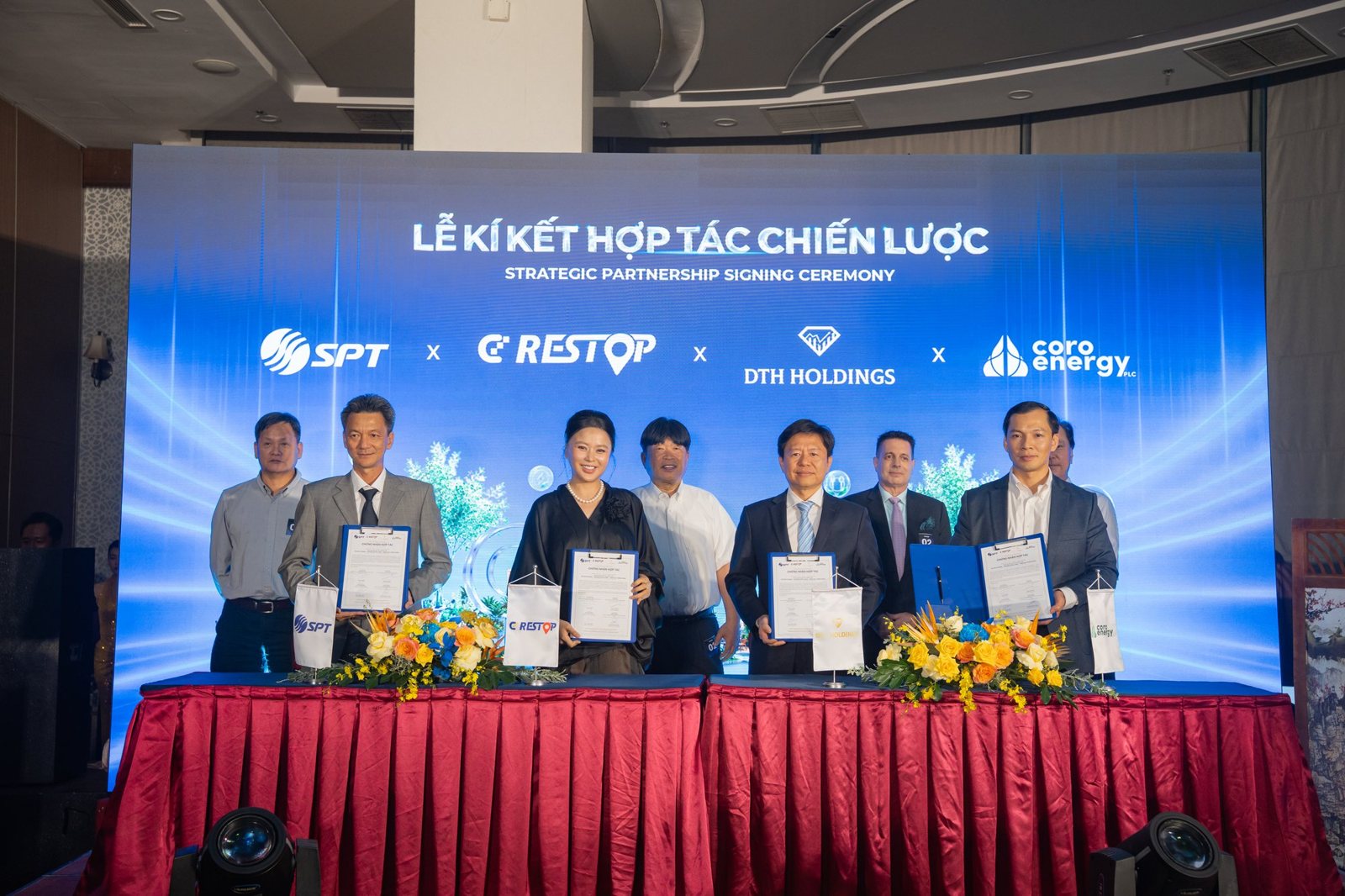
The driver does not need to know that, and should not have to. But those who build the network must know it very clearly, starting on paper. The documents we signed and witnessed on 09/09/2026 divide the work around a Scharge charger into three layers. This article goes through each layer.
The equipment layer: the charger and the electrical works that come with it
Under the Strategic Cooperation Agreement for the Scharge Project, SPT Group (Saigon Postel) issues the charging station equipment standard and ensures that equipment for the network meets the standard. That means any charger that wants to carry the Scharge name must pass SPT Group's standard, and the use of the Scharge brand at each location is approved by SPT Group.
The equipment supplier takes care of the hardware over its whole life cycle. The Memorandum of Understanding between SPT Group and XECO records the supplier's scope as equipment, installation, warranty, maintenance and technical support. The supplier is responsible for the origin and quality of the equipment and for import procedures and conformity certification, if any.
We repeat a point made in earlier articles: XECO is one of the charging-equipment suppliers being considered to participate according to the needs of each project. The selection of suppliers, scope and volume is considered separately by the parties for each project.
So a charger that will not power up belongs to this layer: the equipment, or the low-voltage supply feeding it. We wrote about that electrical part separately in the article on the power infrastructure behind a fast charger.
The platform layer: app, charging sessions and payment
Both documents state clearly: the user app, payment, charging-session management and charging station operating data belong to the Scharge Platform, owned and operated by SPT Group. The equipment supplier does not operate the app and does not manage users' charging sessions or payments.
This boundary benefits the driver. Even if the charger at this site comes from supplier A and the charger at that site from supplier B, the user still has just one app, one account and one place to ask when a transaction has a problem. Chargers connect to the platform through an open protocol, which we explained in the article on the CCS2 and OCPP standards of the Scharge charger.
So a charging session billed twice belongs to this layer.
The rest stop layer: site, safety and people
This is our part. Under the Agreement, we develop and operate the rest stop system: land and sites, local legal matters, design and construction of works on the land according to the four-tier standard set, operation of services at the site, and care for customers and the community. The Memorandum of Understanding between SPT Group and XECO adds our coordination role around the charger: site, power supply, connection, safety and user experience.
In concrete tasks: bay markings, canopy, lighting, signage, entrances and exits, firefighting equipment, staff on duty. And also the things that have nothing to do with electricity but decide whether half an hour of waiting to charge is pleasant or not: clean toilets, a place to eat, a place to lie back.
So a charging bay blocked by another parked vehicle belongs to this layer. It belongs to us.
What about the power supply
Beneath all three layers is the energy infrastructure. According to the ceremony's press release, DTH Holdings is the project developer for the solar power, energy storage and electric vehicle charging infrastructure systems, and is also in charge of the investment model, energy management and organising network operations. Coro Energy is the existing joint-venture partner of DTH Holdings for solar power and storage systems, taking part in investment according to the scope of each project.
| Work around a charger | Party in charge |
|---|---|
| Equipment standard, Scharge brand | SPT Group |
| App, payment, charging-session management | SPT Group (the Scharge Platform) |
| Chargers and low-voltage infrastructure: equipment, installation, warranty, maintenance | Equipment supplier of each project |
| Site, works, on-site operation, customer care | CD Restop |
| Project development, energy management and organising network operations | DTH Holdings |
| Solar power and energy storage | Coro Energy |
Who the charging-session data belongs to
Every charge generates data: who charged, when, how much electricity, how much was paid. The Agreement separates this from the start: charging-session and payment data belong to the Scharge Platform, and business data at the site belongs to us. The scope of sharing between the parties is defined in the detailed agreements.
Both documents cite the Law on Personal Data Protection No. 91/2025/QH15: data of users of charging stations and on-site services is collected and processed under this law, and each party's role as data controller and processor is specified in the detailed agreements. For drivers, this means their information has one clearly responsible party and does not drift between several companies.
What does not exist yet and what we have not promised
We want to be clear about the limits of the 09/09 documents. They are a strategic cooperation agreement and memoranda of understanding. They establish roles and principles. They fix no figure for capital, capacity, prices or sharing ratios.
The indicators users care about most are not in them yet: charger availability rate, response time when a fault occurs, warranty and maintenance terms, spare parts, insurance. The documents state that these indicators will be set out in the detailed agreements for each site cluster. When they exist, we will publish the part meant for users. Until they exist, we make no promise.
Frequently asked questions
Who do I tell when a Scharge charger has a fault?
Tell the staff on duty at the rest stop, or call 0981 107 900. Routing the fault to the right layer is the job of us and our partners, not of the driver.
Who provides the warranty for a Scharge charger?
The equipment supplier of that project is responsible for warranty, maintenance and technical support. The specific terms are in the detailed agreements.
Does CD Restop own the chargers?
It depends on the form of investment cooperation for each site cluster. Our unchanging role is to develop and operate the rest stop where the chargers stand.
Will my charging data be used for advertising?
The collection and processing of user data must follow the Law on Personal Data Protection. Each party's role as data controller and processor will be specified in the detailed agreements.
One point of contact for people on the road
Three layers of responsibility are a matter for people in the trade. For people on the road, we want it to come down to one thing: when something happens, they tell one person, and that person does not answer “that is not mine”.
At each rest stop, we want that person to be our own duty staff. Whose charger, whose app, whose electricity: we know, and we pass it on. The driver only needs to finish a cup of coffee, and the car is charged.
The roles of all ten signing parties are in the article ten parties put pen to paper. Why we chose a multi-party model is in the article why we chose an alliance. Businesses that want to join the network are invited to contact hi@cdrestop.com.
See the app and the charging station management platform on the Scharge platform page.