
📋 Article outline
Son Tra — When the Digital Age Meets a Land with a Soul
Linh Nam Perspective · Strategic Analysis · May 2026
Foreword
There are projects people look at and see an architectural blueprint. There are projects people look at and see an IRR figure. And there are projects — much rarer — that people look at and see a story about timing: the moment when a land, a city, a nation stands before a fork in the road.
The Son Tra Innovation Zone is one such project.
When we at Linh Nam Group first read this proposal, what struck us was not the 500 coworking seats or 800 MICE seats. What struck us was the position of the proposal in time: it appears precisely when Da Nang is becoming one of the first cities in Vietnam to implement the two-tier local government model; precisely when the International Financial Center is being established on the West Bank of the Han River; precisely when Vietnam has just entered the fifth year of its COP26 Net Zero 2050 commitment; and precisely when the global digital nomad community is reshaping the cross-border work map — with Da Nang as one of the region's recognized bright spots.
These four major streams converge at one point. And Son Tra — the ward on the East Bank of the Thuan Phuoc Bridge, adjacent to the bay and the ecological peninsula — is that point of convergence.
This article is not an investment appraisal. That is the work of FuduBank and our specialized departments, and is being carried out according to procedure. This article, published in the Linh Nam Perspective column, is a long strategic reflection — on how a Vietnamese business ecosystem, operating under the Six-Petal principle and the three pillars Forest – Ocean – Knowledge, should view the Son Tra Innovation Zone opportunity.
I. Why Son Tra, and why now
Every story about a project must begin with a geography question. Not geography drawn on a map — the geography of meaning.
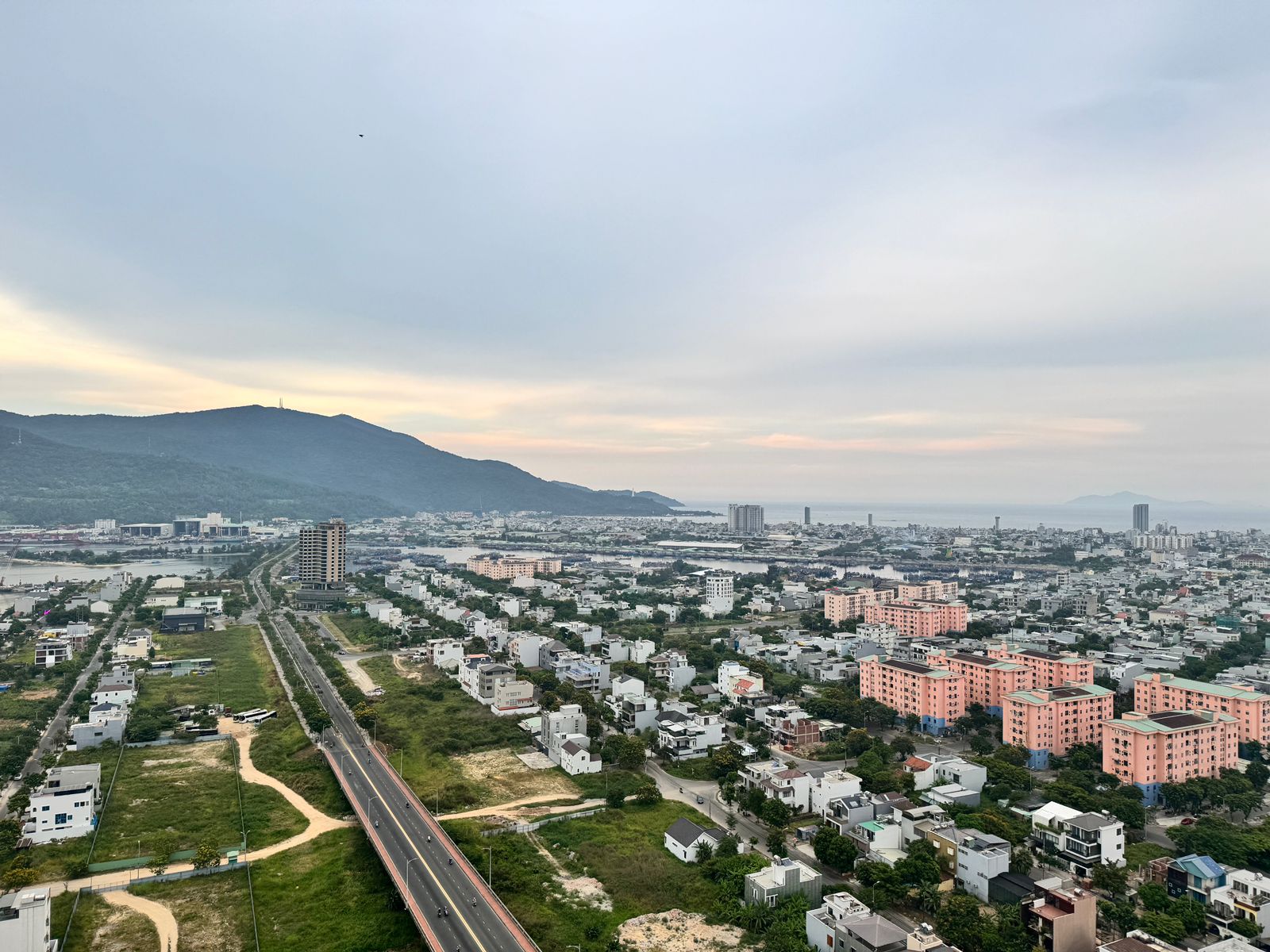
Son Tra, for the people of Da Nang, is not an administrative location. It is the spiritual heart of the city. Son Tra Peninsula with Linh Ung Pagoda, with the 67-meter Lady Buddha statue facing the East Sea, with the primary forest and Bai But, is the spiritual viewpoint that every Da Nang fisherman looks up to before going to sea, and every distant traveler looks up to as their ship enters Tien Sa Port. The name "Son Tra" is linked to a Vietnamese legend of filial piety — the story of a child offering gifts on a mountaintop to pray for parents. This is a land with a soul in the most concrete sense of the word.
And now, an "Innovation Zone" proposal — coworking, MICE, coliving, F&B — is proposed for deployment on Le Van Duyet, Nai Hien Dong streets, right at the foot of that peninsula.
This is the starting point we want to emphasize: the Son Tra Innovation Zone cannot be analyzed like a regular urban area in any other city. A project on a land with a soul must be designed differently — not simply better technically, but different philosophically. Son Tra does not need a copy of Singapore one-north or Bangkok Nimman. Son Tra needs a model that only Son Tra can produce.
This is the first thing Linh Nam reminds itself every time it opens this proposal to read.
The moment when the era is opening its door
If the geography of meaning is one side of the question, timing is the other side. And the current timing, for an innovation district proposal in Da Nang, is perhaps the most favorable in the past twenty years.
The International Financial Center being formed on the West Bank of the Han River is not just a high-end real estate project. It is a national-level strategic decision to place a new financial pole of Vietnam in the Central region, complementing the two old financial poles in Hanoi and Ho Chi Minh City. When such a financial pole begins to operate — and world urban history shows no exception — it will create at least four streams of demand that the surrounding urban area must absorb: high-end medium and long-term accommodation specialists, medium-scale international MICE and conference services, lifestyle services outside working hours (dining, culture, sports, health), and a community of investors and partners on short but frequent business trips.
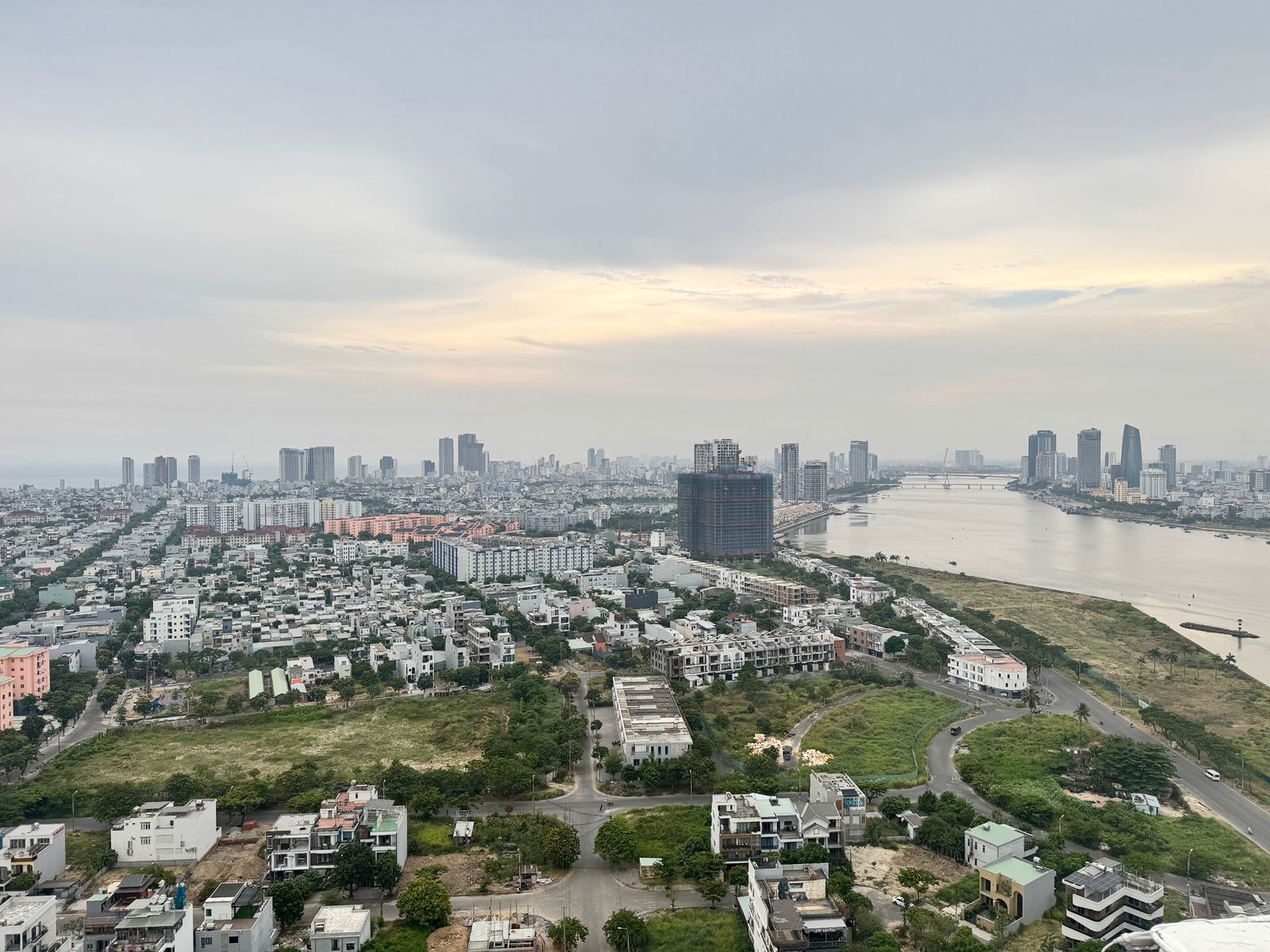
These four streams of demand, in Da Nang 2026, have almost no integrated supply point. The old Hai Chau area is overloaded with infrastructure and lacks green space. The My Khe – Ngu Hanh Son area is too far from the financial center and is more resort-oriented than work-oriented. Da Nang IT Park to the west specializes in technology manufacturing and outsourcing, with no lifestyle layer. Son Tra — only five minutes across Thuan Phuoc Bridge, adjacent to the bay, bordering the ecological peninsula — is the only area with a geographic configuration that meets all conditions.
This is the foundational strength of the Son Tra Innovation Zone proposal in terms of market positioning. The concept of "Digital Waterfront Corridor" — the bipolar axis of Finance – Technology on the West Bank and Living – Working – Experiencing on the East Bank — is not a marketing slogan. It captures a real market gap, at exactly the moment demand is about to be activated, in a geographic position with absolute advantage.
Recognizing the opening door of opportunity is the first quality of a good strategic proposal. The Son Tra Innovation Zone has done that. The next question, and the one we want to spend most of this article discussing, is: the door is open, who will step through, and how?
II. The Four Lenses of Linh Nam
At Linh Nam, every major investment opportunity is viewed through multiple lenses before a decision is made. This is not an administrative procedure — this is the discipline of thinking, inherited from the Six-Petal principle: every decision must simultaneously create value for customers, partners, members, shareholders, society, and the environment. When an opportunity only convinces one or two of the six petals, we learn to stop. When an opportunity convinces all six, we learn to act decisively.
The Son Tra Innovation Zone, in six months of internal assessment, has been viewed through four lenses: the financial investment lens, the green transition lens, the policy-institutional lens, and the cultural-community lens. These four lenses are not independent of each other; they intersect and sometimes conflict. But it is precisely that intersection and conflict that creates the complete picture — the picture that a single investment analysis can never paint.
Lens One — Investment
Viewed from a purely financial perspective, the Son Tra Innovation Zone is a project with rather smart cash flow design, although the proposal itself does not state this clearly.
The four functional clusters — Core Hub (coworking and MICE), Living (coliving and serviced apartment), Culture & F&B, Green & Wellness — have revenue cycles out of phase with each other, creating a natural cash flow cushioning effect. Coworking generates monthly steady revenue under membership contracts, thin but stable profit margins. MICE generates concentrated event revenue, high margins but dependent on the international conference schedule and tourism season. Coliving has stable medium-term cash flow under weekly and monthly packages, the core of long-term cash flow. F&B has daily cycles, high margins on weekends and evenings, filling the demand gap of coworking outside working hours. When the four clusters are placed side by side, a bad MICE quarter can be offset by a peak F&B quarter in the tourism season. This is a structural advantage that independent coworking spaces do not have and is one of the reasons innovation districts worldwide tend to integrate multiple functions instead of specializing.
However — and this is where we need to be candid — the proposal in its current form has serious gaps that need to be filled before any major capital commitment can be made. There is no CAPEX, OPEX, projected revenue, IRR, NPV for each functional cluster and the whole project. There is no sensitivity analysis for sensitive variables such as coworking occupancy rate, coliving rental price, number of MICE events per year. The land plot has not been established legally — the specific area, boundaries, current use, whether it is public or private land are unclear. Anchor tenants — large units committing in advance to shape the ecosystem — have no MOU even in non-binding form.
These three gaps are not faults of the proposal. They are natural characteristics of a concept at a very early stage. The issue is: these three gaps must be filled before the proposal can be presented to the decision-making level on a sound basis. This is both a challenge and an opportunity for Linh Nam, because this is work that FuduBank and our specialized units have the capacity to perform in 4–6 weeks if assigned.
When placing the Son Tra Innovation Zone next to the portfolio Linh Nam is operating, natural fit appears clearly. CD RESTOP can take on the entire F&B and mobility hub cluster — that is the core area of the unit. EVIA can deploy electric shuttles and charging stations along the Digital Waterfront Corridor. FuduBank can be the financial architect for the whole project and at the same time be one of the anchor tenants in the Core Hub. VNYC, which already has bayside presence, can play the high-end business travel layer role for international MICE.
This is not forcing a fit. This is a natural fit that occurs when a "Digital Waterfront" positioning meets an ecosystem already specialized in EV mobility, coastal service infrastructure, and green finance. Another investor coming to Son Tra Innovation Zone must build these capabilities from scratch; Linh Nam already has them. This is a competitive advantage we clearly recognize and want to exploit with discipline.
However, this fit creates a temptation that must be recognized early: the temptation to become the sole investor, turning the Son Tra Innovation Zone into "Linh Nam SDZ," and losing the open ecosystem character that the original proposal aimed for. An SDZ with only Linh Nam is a regular real estate project wearing innovation clothes; an SDZ with Linh Nam in the main operator role but with 5–10 independent anchor tenants is truly an innovation district. Linh Nam must restrain its instinct to "hug it all" and proactively open the door to partners who may be competitors in other segments. This is the discipline we set for ourselves.
Lens Two — Green Transition
If the investment lens shows a good fit, the green transition lens shows an almost perfect fit — and this is where the story becomes significant.
Vietnam committed to Net Zero in 2050 at COP26. Da Nang is in the group of cities leading green urban positioning in Vietnam. When an SDZ-scale project is submitted to the City level today, the ESG layer is no longer a plus point — it is a necessary condition. A project without carbon commitments, without renewable energy strategy, without integration with the Son Tra Peninsula ecosystem will face many difficulties in appraisal at all three Ward, District, and City levels.
The Son Tra Innovation Zone proposal in its current form touches the green layer but only on the surface. The Green & Wellness cluster is mentioned with "community garden, yoga deck, running route, 300-meter motorbike-free zone." These are good items but belong to the green lifestyle layer, not green infrastructure. A truly green innovation district needs three complete layers: the energy layer (rooftop solar, BESS storage, microgrid that can operate as an island), the mobility layer (EV mobility, charging hub, electric shuttle, zero-combustion zone), and the building-materials layer (passive architecture, local materials, recycled water treatment, LEED or equivalent certification). The proposal only touches the lifestyle layer, not to mention the three green infrastructure layers.
This is the gap of the proposal. At the same time, this is the biggest opportunity for Linh Nam.
In the entire current Vietnamese innovation investment market, there is no unit with a configuration equivalent to Linh Nam in integrated green infrastructure. To build this capacity from scratch, a large corporation must invest hundreds of billions and take two to three years. Linh Nam already has it: EV infrastructure through CD RESTOP and strategic relationship with EVIA Hoan Cau Xanh; BESS capacity through the Halo Building portfolio together with 365 Group; green finance platform through FuduBank and relationships with regional sustainable investment funds; and a Six-Petal criteria set that has been publicized and implemented through many previous projects. This is the cumulative asset of many years of building — and the Son Tra Innovation Zone is an opportunity for that asset to be exploited at a worthy scale and stature.
Our proposal, therefore, is not to participate in a coworking area. The proposal is to turn the Son Tra Innovation Zone into Vietnam's first Innovation District to achieve Net Zero Operational commitment right from Phase 1 — with three complete green infrastructure layers.
One, the energy layer. The entire roofs of the Core Hub and Living cluster works are covered with solar power right from the original design, not retrofit. A medium-scale BESS system, from 1 to 3 megawatt-hours, placed underground in the central area, connected to the Da Nang grid but capable of island operation during events or when the grid has problems. This is both an operational shield for international MICE — power infrastructure reliability is non-negotiable with international financial conferences — and a technology showcase that can sell experiences to visitors.
Two, the mobility layer. The entire SDZ ↔ International Financial Center ↔ Airport shuttle is EV. Charging hub placed at the SDZ perimeter, open to Son Tra Ward residents — turning commercial infrastructure into community infrastructure. The Core Hub central area is a zero-combustion zone, only EVs and non-motorized vehicles, with a shared bicycle and electric scooter system. This is the point where CD RESTOP and EVIA can deploy almost immediately, with low marginal cost because the infrastructure and fleet are already in place.
Three, the building layer. Architecture complies with minimum LEED Gold standards, with the ambition of LEED Platinum for the Core Hub. Wastewater treated in a closed loop for tree watering and toilets. Construction materials prioritize engineered wood from FSC-managed forests — this is the point where Linh Nam's Forest Economy floor can supply directly, turning the internal value chain into a structural advantage. Fired bricks from Central Vietnam clay. Da Nang local granite. Both reducing transport carbon and creating an unmistakable regional identity.
There is a sensitive point in this lens that needs to be handled particularly carefully: Son Tra Peninsula.
Son Tra Peninsula is an ecological heritage with the red-shanked douc langur — an endangered primate species recognized in the IUCN Red List, a biological symbol of Central Vietnam. The proposal says "integrate Son Tra Peninsula landscape" — sounds positive — but this is the area where every mistake can be amplified by the media and turned into a national environmental scandal. Da Nang's history has recorded costly lessons about exploiting the Son Tra Peninsula incorrectly. An SDZ-scale project cannot fail to clearly recognize this risk.
The way Linh Nam proposes to handle it is to reverse the logic. Instead of the SDZ "exploiting the peninsula landscape," the SDZ positions itself as a station for protecting and researching the Son Tra Peninsula. Part of the Core Hub can be the Center for Son Tra Biodiversity, with a research lab, with a scholarship program for biology and ecology students, with cooperation agreements with GreenViet and national and international conservation organizations. The Culture & F&B cluster organizes regular exhibitions on peninsula ecology. The walking route is designed by conservation experts to minimize impact on the langur's habitat.
This approach seems "humanitarian without calculation" but is actually very carefully calculated. A project positioning itself as a protector will face much less resistance than a project positioning itself as an exploiter. Son Tra Ward, Son Tra District, the Departments of Natural Resources & Environment and Tourism all have political reasons to support. International media — extremely important for attracting digital nomads and Western anchor tenants — has a beautiful story to tell. And, not at all small, this is right in terms of values, in line with the Six-Petal principle that Linh Nam has publicly committed to from day one.
More importantly at the long-term strategic level: if executed well, the Net Zero Innovation District model designed by Linh Nam in Son Tra will become a replicable intellectual asset. Hai Phong, Quy Nhon, Phu Quoc all need green innovation districts in the next 5–10 years. So do Phnom Penh, Vientiane, Yangon. A successful model in Da Nang will pave the way for Linh Nam to deploy this model in the broader Southeast Asia region. The green transition lens, therefore, is not just a matter of business ethics; it is a matter of long-term growth strategy for a Vietnamese corporation with regional ambition.
Lens Three — Policy and Institutions
When reading the Son Tra Innovation Zone proposal in the context of 2026, two major variables reshaping Da Nang's institutional space cannot be ignored. One, the two-tier local government model has been deployed, changing the structure of authority between management levels. Two, the administrative unit arrangement makes Son Tra Ward receive additional authority and significant management scope. Adding the fact that the International Financial Center is being formed on the West Bank with its own special mechanisms, Da Nang 2026 is a city in the deepest institutional restructuring phase in two decades.
This is both an opportunity and a risk. Opportunity: during the restructuring phase, the door to new policy proposals is wider than normal. A proposal of good quality, submitted at the right level, at the right time, can be integrated into the official planning and enjoy a special mechanism. Risk: during the restructuring phase, decision-making channels are also more complex, the role of levels is being reshaped, and a proposal going to the wrong authority can be hung up for a long time.
There is a point in the proposal in its current form that we want to share frankly because this is a serious gap: the proposal is submitted to the Son Tra Ward leadership but the proposed content includes issues belonging to much higher authority. Long-term visas for digital nomads is a National-level issue. Corporate income tax incentives is National Assembly through law or Government through decree level. Integration into the zoning plan is City level. PPP mechanism and designation of special Innovation District is City or Central level depending on scale.
Son Tra Ward has no authority to decide any of the above. So why submit to the Ward? Because the Ward has opinion authority — a project in the area that the Ward supports will go much faster than a project the Ward has no opinion on or opposes. The Ward is the first door, not the last door.
Understanding this changes the approach. The document submitted to the Ward should not be a proposal seeking approval — it should be a document seeking research accompaniment, accompanied by business commitments on local labor, community fund, and infrastructure piloting. The goal is for the Ward to say "we support this policy, request the District and City to consider" — not for the Ward to sign approval for something beyond their authority. The way CD RESTOP recently presented to Son Tra Ward — asking open questions, not seeking approval, inviting the Ward to participate in shaping — is the right approach and will be maintained.
The Son Tra Innovation Zone proposal will only really take off if there is a special mechanism issued by the National Assembly or the Government. Specifically it may include a controlled pilot mechanism for fintech and mobility-as-a-service, corporate income tax incentives for technology enterprises in the special zone, long-term visa mechanism for digital nomads, land allocation mechanism through designation for innovation district PPP projects. Lobbying for these mechanisms is not the Ward's work, not the work of an individual investment file. This is the work of long-term policy corridors, going through many channels: the Da Nang National Assembly Delegation proposing to the National Assembly, Da Nang City People's Committee proposing to the Government, specialized Ministries appraising, and think tanks together with associations creating expert opinion.
Linh Nam has some good points of contact to participate in this corridor. The DAVAS Angel Summit network in Da Nang that we co-organize. FuduBank's role in the venture investment community. Policy proposals we have submitted at national forums before, including documents submitted to the highest leadership level on cultural and green economy development. All are points of contact that can be activated when needed. But we must clearly recognize: this is a long lobbying effort, at least 18–24 months for a pilot mechanism, 36–48 months for a law. The Son Tra Innovation Zone cannot wait for the policy to be completed before deployment — must run in parallel: deploy the feasible part within the current legal framework, while lobbying for special mechanisms to expand the blocked part.
There is a final point in the policy lens that needs emphasis: the relationship between the Son Tra Innovation Zone and the International Financial Center is an asymmetric relationship. The International Financial Center is a national-level project with resources and political patronage at the highest level; the Son Tra Innovation Zone is a local-level proposal, based on private business resources and grassroots government support. The IFC does not need the SDZ; the SDZ very much needs the IFC.
Understanding this asymmetry is important because it shapes the approach strategy. The SDZ cannot wait for the IFC to proactively cooperate — must proactively propose, proactively supplement, proactively reduce costs for the IFC rather than increase costs. Specifically, the SDZ can propose to the IFC Management Board to receive and serve demand flows that the IFC cannot meet internally: medium and long-term accommodation for experts, medium-scale international MICE, expanded R&D space for fintech startups. The SDZ's position is a utility buffer zone for the IFC, not a competitor. This buffer role is only convincing if designed from the start — and this is something Linh Nam can proactively work on in the pre-feasibility phase, through direct contact with the IFC Management Board and proposing a non-binding MOU on functional complementarity.
Lens Four — Culture and Community
Here, we want to return to the starting point of the article: Son Tra is a land with a soul.
Among the four lenses, this is the most difficult to talk about but the most important. Difficult because it cannot be quantified in financial tables, does not appear in technical checklists, has no ESG index to report. Most important because this is the very factor that decides whether a project in Son Tra will be embraced or rejected by the local community — and that decision, once formed, no marketing budget can reverse.
An "Innovation Zone" project applied to a soulful place like Son Tra without touching the cultural layer will be felt as a cold invasion. This is not theory — this is the actual feeling of local residents when they see an "Coworking · MICE · Coliving" advertising board on the road they have walked all their life. They do not oppose development; they oppose being ignored.
This is where Linh Nam has a differentiated advantage that no ordinary technology investor has. The Linh Nam ecosystem has Bach Gia — a program preserving and honoring Vietnamese lineages, already partnered with the Institute for Lineage History. There is VHG — heritage cultural investment, implementing the Heritage Women Rise program at national scale. There is HATRAN Heritage — court ao dai aesthetics. There is Linh Nam Cosmos — cultural industry investment. This is a capability set that large technology and real estate groups cannot recreate in a short time. This is soft asset accumulated over many years — and the Son Tra Innovation Zone is an opportunity for that asset to enter a project with symbolic meaning.
Specifically, under this perspective, the Son Tra Innovation Zone should not be a neutral innovation district that can be placed anywhere in the world. It should be an innovation district rooted in Son Tra — and that is expressed through specific details, not slogans.
The name needs careful thought. "Son Tra Innovation Zone" is a good international name for foreign partners, but a Vietnamese name is needed for domestic — a name with literary depth, which can be proposed through a small contest with the local community. The name is the first way the project says "I am not a stranger."
The storytelling layer needs to be present right in the space. The Culture & F&B cluster should not be a generic food street. It should have a series of programs telling the Son Tra story — about fishermen, about red-shanked langurs, about Lady Buddha Quan Am, about the port of Da Nang from the French colonial period to the open era. A small museum. A sailor's library. A corner exhibiting traditional nets and boats. Not large, but present. This is the content layer that Bach Gia can supply directly.
The creator residency needs clear intent. The proposal says "creator residency" but does not say residency for whom and to do what. Our proposal: residency for Vietnamese and international poets, writers, musicians, painters to compose works about the East Sea and Central Vietnam. A small grant — for example fifty million VND per author over three months — for eight to twelve artists per year, is a cheap investment with enormous media and cultural impact. Their work automatically becomes the SDZ's story.
Regular festivals anchored to the local cultural calendar. March, Lady Buddha festival. July, Vu Lan. August, Mid-Autumn. January, Lunar New Year. Four occasions a year, the SDZ organizes free community events for Son Tra Ward residents. Not commercial events — real festivals. HATRAN performs court ao dai. Bach Gia introduces lineage rituals. Linh Nam Cosmos sponsors ethnic music programs. After three years, the SDZ becomes part of Da Nang's cultural calendar — and that is an asset that cannot be copied by any marketing budget.
Architecture needs regional soul. The proposal says nothing about architectural style — this is a dangerous gap because without guidance, architects will default to "global modern" style: glass, steel, concrete, can be placed in Singapore or Bangkok similarly. The style Linh Nam proposes is "Modern Vietnamese Coastal" — combining modern concrete with natural wood, sloped roofs evoking Central Vietnamese stilt house roofs, red brick walls evoking Hoi An, courtyard spaces like old Vietnamese houses. This is a style with a design language already developed for decades by Vietnamese architects like Vo Trong Nghia, 1+1>2, Tropical Space — not invented from scratch — and it creates an unmistakable regional identity.
Finally, and most importantly, is the approach to the local community. This is perhaps the most difficult point to speak about but the most decisive.
An SDZ-scale project will certainly impact Son Tra Ward residents. Rising rental prices. Changing street appearance. Creating a feeling that "this space is no longer mine." The common reaction of investors when facing this risk is to organize a community consultation session, collect opinions, check the completed box. This is a check-the-box approach that changes nothing.
The way Linh Nam proposes to approach is different: the Son Tra Ward community is not just consulted, but becomes emotional co-owner of the Son Tra Innovation Zone. Specifically: a Community Development Fund managed by the Ward, contributed periodically by CD RESTOP and other Linh Nam units as a percentage of revenue — a commitment publicly stated in the presentation to Son Tra Ward. A priority recruitment program for local residents at all levels, not just general labor — minimum sixty percent local labor has been committed by CD RESTOP. A scholarship program for fishermen's children and long-term residents to study technology, design, and foreign languages, so that when the SDZ operates fully, these very people are the core workforce. A community cultural space in the Culture & F&B area, operated by the Ward, free for local residents.
This is not a cost. This is an investment in long-term license to operate. A project where the local community feels "this is ours too" will operate much easier than a project where the community feels imposed. In bad scenarios — when there is negative media, when there is legal dispute, when there is operational incident — the local community is a natural defensive line or a source of negative pressure, depending on whether you have invested or not.
III. Synthesis — A Fitting Picture
When placing the four lenses side by side, an overall picture appears quite clearly.
On the financial investment axis, the Son Tra Innovation Zone is a high-potential project with uncontrolled risks, with a good fit with Linh Nam's operational capabilities but requiring discipline not to become a monopoly project. Level of fit: medium-high, conditional on the three gaps being filled in the pre-feasibility phase.
On the green transition axis, this is a rare opportunity for Linh Nam to establish Vietnam's first Net Zero Innovation District model, replicable to other provinces and internationally. Level of fit: very high. This is the lens with the greatest competitive advantage.
On the policy and institutional axis, the proposal is right on the national flow on innovation and digital transformation, but in its current form asks the wrong-level questions and lacks special lobbying corridors. Linh Nam has a relative advantage thanks to previous policy access experience. Level of fit: medium, conditional on significant investment in the 18–24 month lobbying corridor.
On the cultural and community axis, the proposal in its current form has a large gap — and this is where Linh Nam has uncopyable differentiation. Level of fit: very high, this is the lens that creates license to operate and long-term identity.
Looking at the whole, the Son Tra Innovation Zone is a proposal very fitting with the Linh Nam configuration at the strategic level. The four lenses jointly show resonance, no lens reports "not fitting." But fitting at the strategic level does not mean ready for big investment immediately. Fitting at the strategic level means worth investing resources to bring the proposal from concept to investment-ready, then deciding to commit large capital in disciplined phases.
This is how Linh Nam is approaching: small steps, high discipline, open options, no burning of stages.
IV. Closing — A Story Worth Telling
This article may have been longer than a regular investment analysis. That is intentional.
The Son Tra Innovation Zone, for Linh Nam, is not just an investment opportunity. It is a test: a test of whether a Vietnamese business ecosystem, operating under the Six-Petal principle, has the capacity to stand on equal footing with large international corporations in designing and operating a modern innovation district. A test of whether the "green economy – digital economy – cultural economy" model that we have spoken of in strategy documents can be realized in a concrete, measurable, operational project, or remains just a slogan on slides. A test of whether a Vietnamese enterprise, coming to a soulful Vietnamese land, knows how to come with humility and creativity simultaneously, or not.
We do not have certain answers to these questions. No one does. The answers will only emerge through each specific decision in the coming months and years — through the way Linh Nam interacts with Son Tra Ward, through the way FuduBank builds the financial model, through the way CD RESTOP and EVIA deploy the first pilot, through the way Bach Gia and HATRAN bring Vietnamese culture into a digital space.
What we can commit to is the approach. Linh Nam comes to Son Tra not to develop a zone — Linh Nam comes to write a new chapter in the story of this land together with Son Tra Ward, with the local community, with the Son Tra Peninsula. When that principle is maintained, every technical problem — land, finance, policy, partners — has a solution. When that principle is abandoned, no financial solution is enough to save a project that has lost its soul.
Son Tra has stood there for millions of years before we came. Son Tra will continue to stand there long after we pass. The work of a generation of Vietnamese enterprises like Linh Nam, if fortunate enough to participate in the story of this land, is to leave behind a notable chapter — not a beautiful architectural drawing, not an impressive IRR figure, but a living model of how technology, finance, culture, and community can operate together, on a common foundation of Vietnamese values.
That is the reason, after six months of deliberation, we decided to step forward.
That is the reason this article is published today.
That is the reason Linh Nam is here.
This article is published in the Linh Nam Perspective column, as the official viewpoint of Linh Nam Group on the opportunity to participate in the Son Tra Innovation Zone proposal as of May 2026. The viewpoint will be periodically reviewed and updated according to new developments on Son Tra zoning planning, International Financial Center structure, and special policy mechanisms.
For all exchanges and cooperation proposals, please send to the official contact address of Linh Nam Group via linhnam.vn.