
📋 Article outline
The question CD Restop hears most often from site owners is not "how many kW does the charger deliver", but "can my property host a charging station". It is the right question, though it rarely has a simple answer: assessing a location is a multi-variable problem, and most of the variables that matter sit behind the switchboard, below ground and inside the lease agreement — not at the street frontage. Below are the seven factors, in the exact order our engineers prioritise them during a site survey.
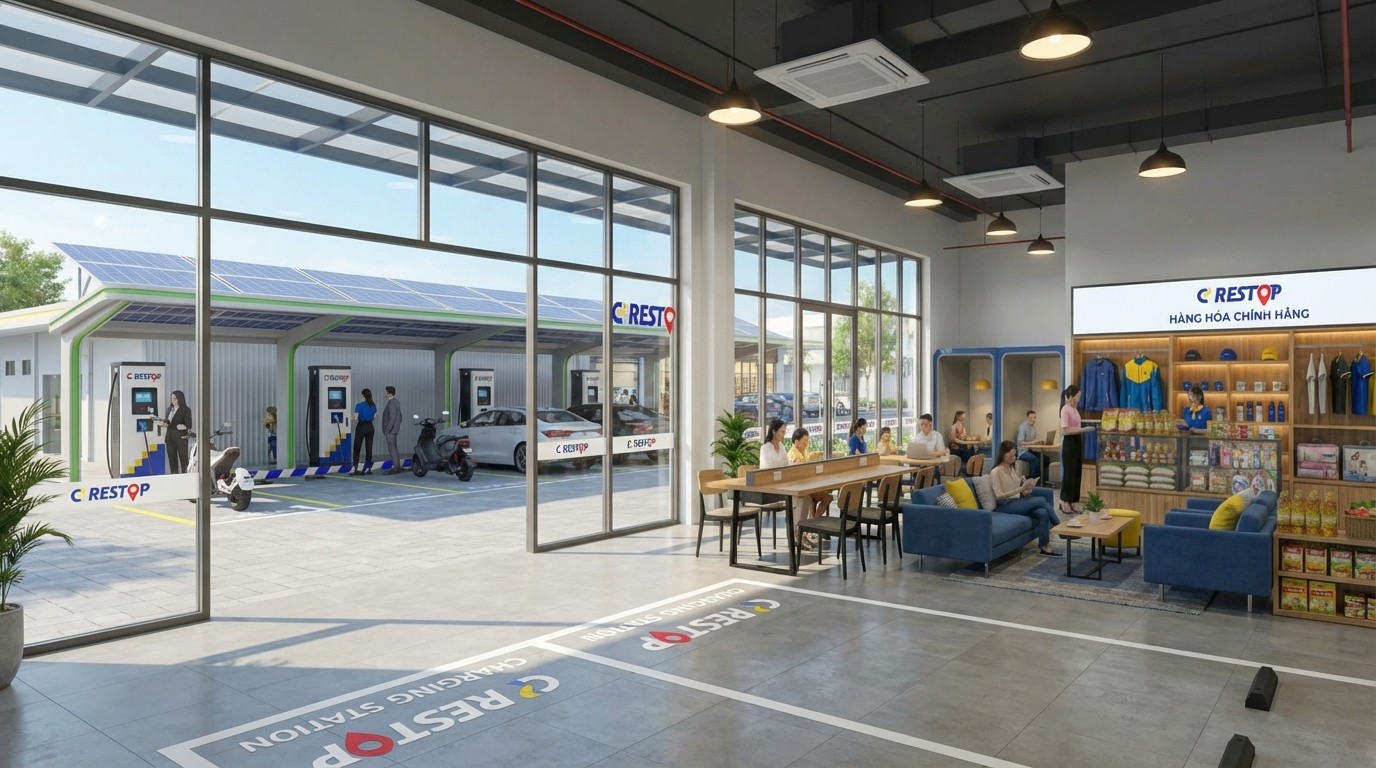
A charging station does not sell electricity, it sells dwell time
A DC fast-charging session lasts a few dozen minutes; overnight AC charging runs for several hours. Throughout that time the vehicle occupies a bay and the driver has to stay within walking distance. Which means a charging site is only a good one if the location already holds customers for precisely that span of time — not if a lot of vehicles simply drive past. A petrol station sells a few minutes of behaviour, so a convenient location is enough; a charging station sells tens of minutes of behaviour, so the location needs a reason to stay.
Seven factors that decide a good charging site
1. Available electrical capacity — the most important factor, and the one most often underestimated
This is factor number one, without exception. A cabinet-type 160 kW DC charger requires an AC 380V ±15%/50Hz input at the corresponding capacity; a cluster of several 160–320 kW DC units side by side pushes demand to a level that most existing commercial properties do not have available. Site owners, meanwhile, tend to judge their location by traffic volume and yard area, and rarely by transformer capacity.
The electrical survey covers four items: the transformer capacity still free once existing loads are deducted; the condition of the distribution board and cable routes, and the feasibility of separate metering for charging operations; low-voltage grid connection conditions; and the ability to apply to the utility for a capacity upgrade — a procedure that takes time and sometimes requires a new transformer. This is the root of a trade-off few anticipate: a site with excellent traffic but a weak electrical base will reach commissioning considerably later than a site with average traffic and a transformer that has spare capacity. The four-component investment model agreed by the CD Restop – Scharge – SPT alliance addresses exactly this bottleneck: low-voltage electrical works come first, with headroom for a 5–10 year horizon; rooftop solar for self-generation and self-consumption; a BESS that stores energy during off-peak hours and discharges at peak; and chargers with dynamic load management so that several units can share a single supply.
2. Access, turning radius and bay layout
Passenger cars need direct access and standard bays. But if the target includes electric buses, light trucks or tractor-trailers, every dimension changes: turning radius, lane width, bay length, and clear headroom if the yard is covered. Charging cables are 5 m long and can be customised, but the charging port is not in the same place across vehicle models, so the position of the charger relative to the bay has to be worked out from the drawings. On dual-gun DC units, the power allocation mechanism — one gun taking the full output, or the two splitting it when both are in use — determines how many bays are genuinely usable at peak hours.
3. The natural dwell time of customers at the site
The rule for selecting charger type: output has to match the time customers already spend at that location.
- Holds customers 30–45 minutes — restaurants, supermarkets, entertainment venues, rest stops: suited to DC fast charging; by the time the meal is finished, the vehicle has taken on enough charge to continue.
- Holds customers overnight or for several hours — hotels, apartment buildings, staff car parks, fleet depots: suited to AC charging at 7–14 kW.
- Customers stop only a few minutes — standalone convenience stores, transfer points: difficult to make work unless amenities are added to hold customers longer.
Two common mistakes sit at either end of this range: a high-output DC charger at an apartment building is investment beyond the need — residents plugging in overnight have no use for that speed — while an AC charger at an inter-provincial rest stop is all but pointless, since no driver will wait several hours mid-journey.
4. Traffic volume — and, more importantly, direction of travel
A traffic count is necessary data but not sufficient; what needs to be known is which direction it moves in and at what time. On a national highway, a property on the right-hand side of the outbound carriageway and one on the right-hand side of the return carriageway serve two entirely different groups — one setting out with a nearly full battery, the other returning with most of the charge spent; only one of them genuinely needs to charge. The same applies to time structure: a site that is busy only at weekends has a load curve quite unlike one serving ride-hailing and delivery vehicles that run steadily all week — and a site with a high but short peak is a good candidate for a BESS.
5. On-site amenities — what decides whether customers come back
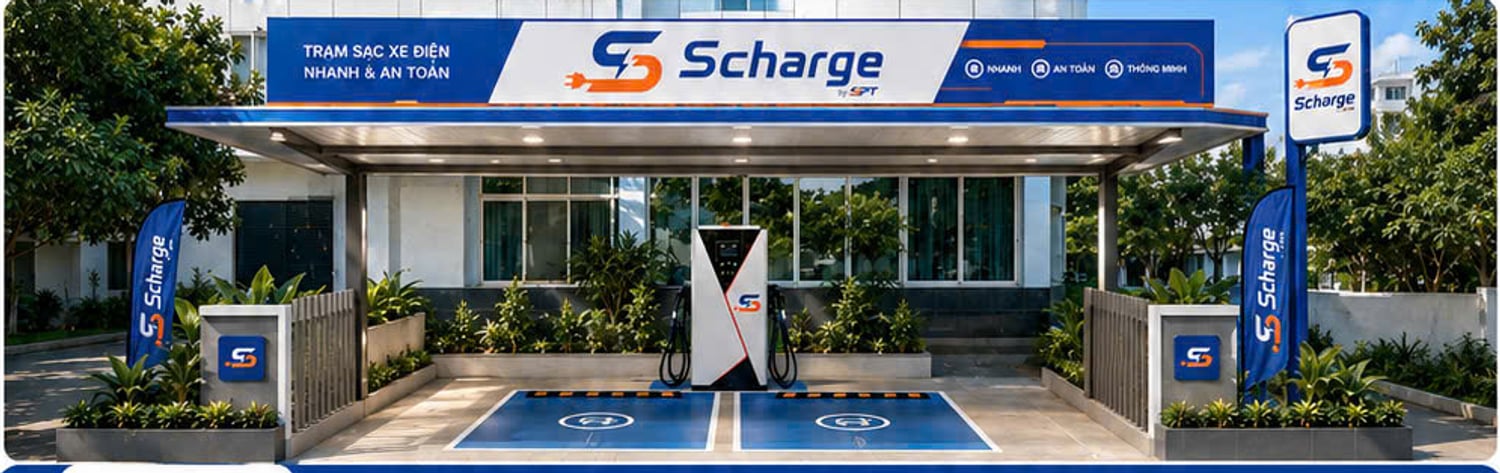
While charging, drivers and passengers leave the vehicle; their experience during that time is precisely the product the rest stop is selling. The minimum list: clean restrooms, covered seating, drinking water, light refreshments, reliable wifi, phone-charging outlets. This is why the CD Restop rest-stop model is designed around four layers of value — amenities, clean energy infrastructure, retail and local culture, and operational data — rather than being merely a yard with chargers in it.
6. Safety, lighting and night-time surveillance
A significant share of charging demand occurs in the evening, which brings requirements for adequate lighting across the parking area and pedestrian routes, camera coverage of the chargers and bays, impact bollards, good surface drainage, and a fire-protection plan appropriate to high-power electrical equipment. The equipment itself is designed for outdoor service — IP54, sheet-steel enclosure, operating temperature −25℃ to 50℃, Class 1 metering accuracy — but good equipment is no substitute for a safe site, and how safe it feels to stop alone at 10 p.m. is something many drivers weigh ahead of charging speed.
7. Land-use legal status and lease term
Charging infrastructure is not portable equipment: charger foundations, buried cabling, the distribution board, the metering system, and both the rooftop solar array and the BESS compound are all fixed to the property. The lease term therefore has to be long enough to depreciate the whole of the fixed infrastructure, not merely long enough to recover the cost of the equipment. The documentation to review covers land-use rights and the legal right to lease, the zoning of the plot, permitted use, utility connection conditions and fire-protection records — reviewing early is far cheaper than finding out late, after the contract has been signed.
The three most suitable property types — and the limits of each
Petrol stations. Already designed around the behaviour of stopping a vehicle: access, turning radius, lighting, cameras, fire-protection plans and legal documentation are all in place; many sites also have a convenience store and restrooms. The limits lie in yard area, and in the fact that dwell time here is optimised for the few minutes of refuelling.
Rest stops on inter-provincial routes. Dwell time here matches a fast-charging session better than anywhere else; the large footprint allows bays for buses and trucks, the large roof area suits solar, and there is open ground for a storage system. The limits lie in electrical infrastructure: these locations are often far from supply, so the low-voltage investment is substantial and the preparation period longer.
Shopping-centre car parks. Customers typically stay one to two hours, the property already has a high-capacity transformer, and security and amenities are fully provided. The limits lie in the engineering of underground car parks: ventilation and heat dissipation for high-power equipment, clear headroom that restricts larger vehicles, and negotiating dedicated bays with building management.
Why a "traffic anchor" matters more than the number of vehicles passing by
The common mistake is to take traffic volume as the primary indicator. Volume tells you how many vehicles pass by, but a charging station lives on the number of vehicles that stop and stay long enough. The two are not proportional, and are sometimes inversely related — the busiest stretch of road is usually the hardest one to pull off.
A good charging site is not the one that sees the most vehicles, but the one that gives vehicles a reason to stop — and gives the people inside them a reason to want to stay another thirty minutes.
In the CD Restop rest-stop model, the charging station is both an essential service and a traffic anchor: it creates a compulsory pause, and that span of time feeds the remaining layers of value — food and drink, buying local produce, rest. In return, it is those very layers that make the charging site the one chosen again.
How CD Restop conducts a site survey
Under the announced division of roles, SPT (Saigon Postel) owns the Scharge brand and supplies the chargers, the app platform and operating software, together with the transmission infrastructure for station connectivity. CD Restop is the distributor and infrastructure developer: surveying locations, investing in construction, installing, integrating the station into the social-welfare rest-stop chain and operating it 24/7. Assessment follows three steps.
- Submit your requirement — address, area, current use and details of the existing power supply (if any).
- On-site survey — measuring the property, inspecting the transformer and distribution board, assessing access, observing actual dwell time and traffic direction, and reviewing legal documentation. The output is a proposed configuration: AC or DC charger type, quantity, siting, and the low-voltage works required.
- Agree the model, sign and deploy — three options: purchase and self-operate (the partner buys genuine chargers, CD Restop installs and warrants them, and the partner keeps all charging revenue); joint investment and operation (the partner contributes the site and transformer, CD Restop invests in the chargers, software and operation, and the two share actual monthly revenue as agreed); corporate charging station (a dedicated station for the EV fleets of transport, delivery and ride-hailing companies).
The signing ceremony on 09/09/2026 between CD Restop, SPT, Coro Energy PLC and DTH Holdings moves the collaboration from intent to formal commitment. On that basis, the network expansion roadmap proceeds by selecting locations that satisfy the seven factors set out above.
Contact
If you manage a property and would like to know which model suits it, send the details to hi@cdrestop.com. Our technical team will schedule a survey and propose a configuration. Scharge equipment is supplied according to the price list issued by SPT — please get in touch for a quotation for your specific configuration.
See how charging zones are laid out across the four rest stop tiers on the Scharge stations page.