
📋 Article outline
Context: The city accelerates its green transition
Ho Chi Minh City is entering a decisive phase in its roadmap for converting to electric transport — from public buses, taxis and ride-hailing vehicles to personal vehicles. The need for synchronized, stable and smart charging infrastructure has become a prerequisite. The biggest challenge, however, does not lie in the charging stations themselves — but in the underlying power infrastructure: source capacity, the low-voltage grid, and the ability to balance load during peak hours.
This is precisely the problem that the CD RESTOP – Scharge – SPT alliance has determined to solve at its root, rather than merely installing end devices.
Four pillars of infrastructure investment
At the working session, the parties agreed on an integrated investment model comprising four technical components:
1. Low-voltage power — the foundation of the network
- Surveying and investing to upgrade the low-voltage electrical system at each cluster location: transformer stations, distribution cabinets, power cables and dedicated metering systems for charging operations;
- Working with the power sector to register capacity, ensuring a stable supply for high-power charging clusters ranging from 160 kW to 320 kW;
- Designing reserve capacity for the growth of electric vehicles over the next 5–10 years, avoiding piecemeal investment.
2. Solar power — an on-site energy source
- Installing rooftop solar power systems at rest stops, parking lots and facilities within the location portfolio of SPT and its partners;
- Prioritizing a self-generation, self-consumption model to reduce operating electricity costs and ease pressure on the city grid;
- Gradually increasing the share of renewable energy in the total electricity supplied for charging operations — moving toward station clusters that meet a "genuinely green charging" standard, green not only in the vehicles but green from the power source itself.
3. Energy storage system (BESS) — the key to load balancing
- Investing in Battery Energy Storage Systems at key charging clusters, storing daytime solar power and off-peak electricity;
- Discharging during peak hours to help reduce electricity costs, stabilize fast-charging capacity and ease the pressure of grid upgrades;
- Opening up the ability to operate a microgrid model at large complexes — combining solar, BESS and the grid into a single smart, self-balancing energy system.
4. Scharge smart charging stations — the touchpoint with users
- Deploying DC charging stations of 160–320 kW for electric cars, buses and trucks; combined with AC stations for overnight charging and charging at parking spots;
- A centralized operations management platform: dynamic load management, digital payment, remote monitoring and 24/7 customer care;
- Connecting data over SPT's telecommunications infrastructure — ensuring stable, secure transmission for the entire network.
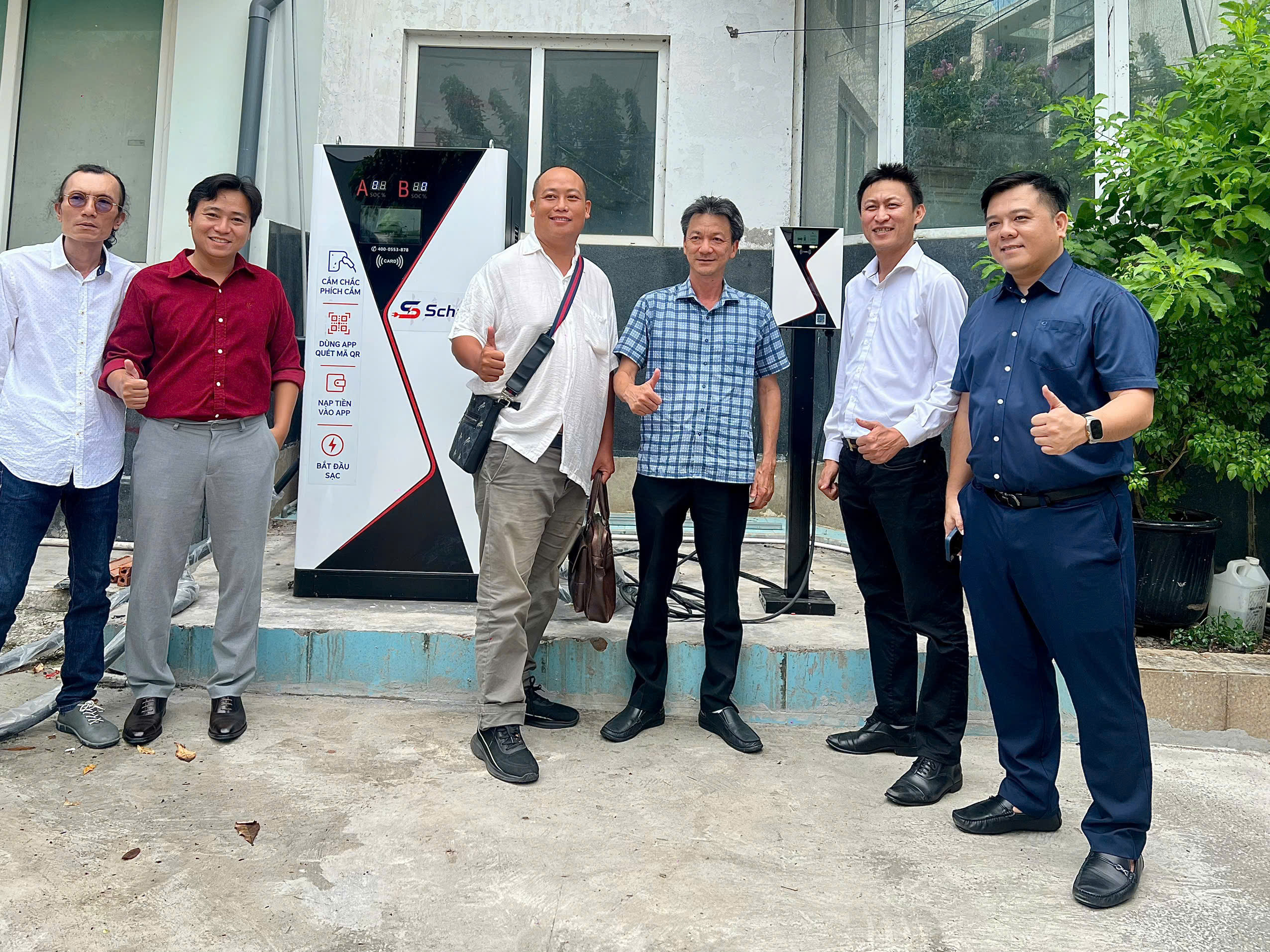
Clear division of roles — Amplifying strengths
- SPT contributes a location portfolio spread across the city, telecommunications infrastructure and data connectivity capability — the decisive factor in how quickly the network can be rolled out;
- Scharge is responsible for the charging technology solutions, the management software platform and equipment technical standards;
- CD RESTOP plays the role of project development and investment arrangement: surveying, designing the financial model, organizing the construction of low-voltage, solar and BESS works, and operating under the philosophy of welfare infrastructure — setting aside resources from business operations to serve community programs in the very areas where projects are deployed.
Expansion roadmap
The parties agreed to implement in three phases:
- Phase 1: completing pilot station clusters in Ho Chi Minh City on the available location portfolio — standardizing the technical, legal and operational model;
- Phase 2: scaling up coverage across the whole city, prioritizing main transport corridors, industrial zones, depots and densely populated residential areas;
- Phase 3: expanding to neighboring provinces and nationwide, in sync with CD RESTOP's network of green rest stops along the expressways.
A commitment to accompany the city
The working session concluded with strong consensus on the action plan. The three-party alliance affirmed its commitment to accompanying Ho Chi Minh City's green transition program — not only with charging stations, but with a complete energy ecosystem: from clean power sources, smart storage and a robust low-voltage grid to a convenient charging experience for every resident.
The green transition begins with infrastructure. Infrastructure begins today.
Learn more about the Scharge charging ecosystem at the Scharge brand site.